

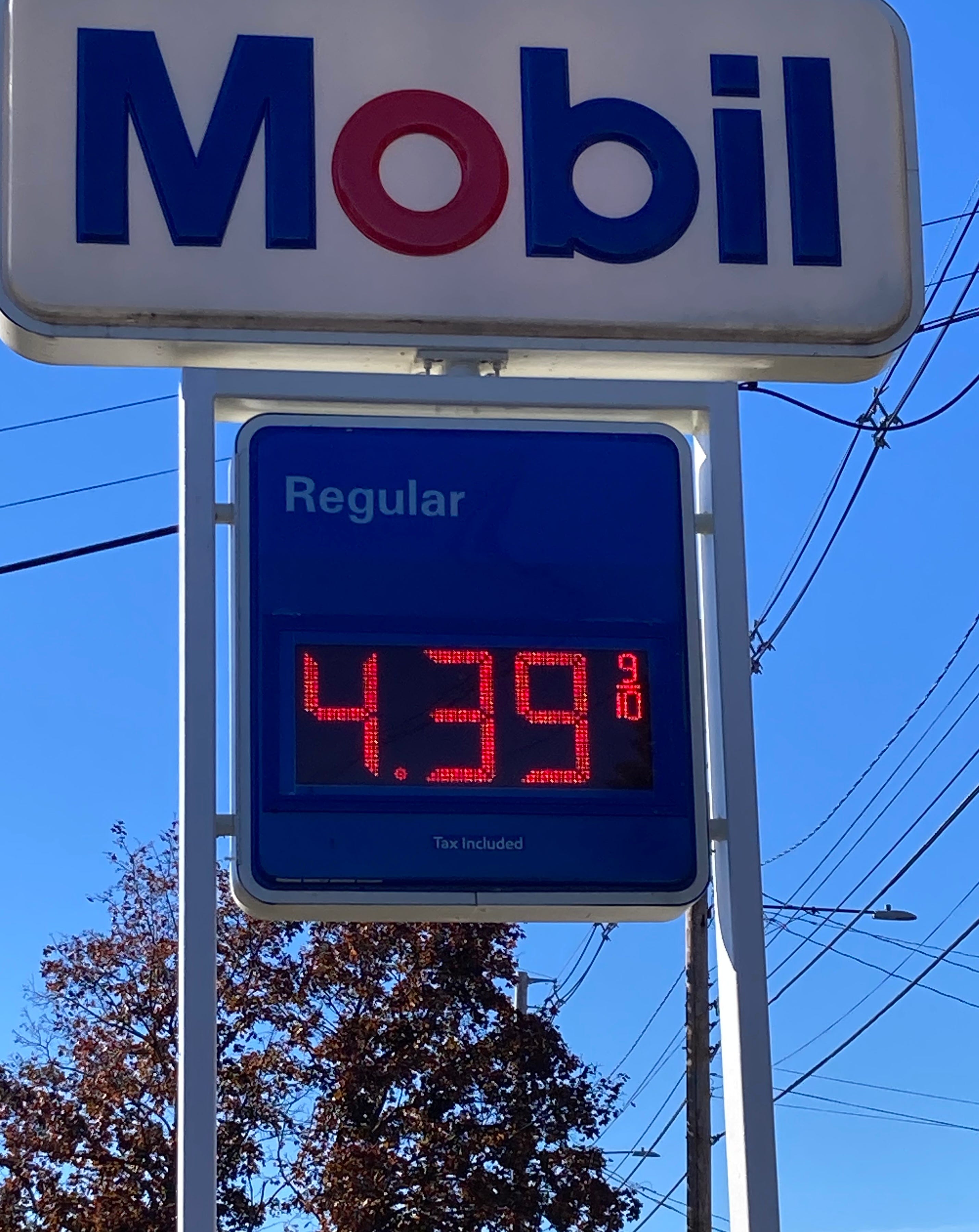
As President Trump’s war in Iran drags on, 2026 has set a new record for the number of days where the average price of gasoline has exceeded $4 a gallon. “When dependence on fossil fuels leaves household budgets at the mercy of war and volatile global markets, it is ordinary people who pay the price for an energy system built around fossil fuels,” 350.org US campaigns manager Candice Fortin said in a statement.
With U.S. voters set to go to the polls in two weeks for the 2026 midterm election (and early voting has already started), the economy and the soaring cost of living are top concerns. Polling indicates that most Americans are feeling financially strained and think that the country is headed in the wrong direction. New data from the Bureau of Labor Statistics’ Consumer Price Index (CPI) backs up this widespread sense of economic anxiety and aggravation.
Overall inflation rose to 3.7 percent in September, up from 3.4 percent in August. It is the highest reported increase since May when the annual inflation rate of 4.2 percent reached a three-year peak. And as the Guardian noted, September’s figure is the highest that inflation has been just ahead of a midterm election (excluding the COVID-19 pandemic) since 1990.
Much of the rise stems from skyrocketing energy and fuel costs linked to President Trump’s ongoing war with Iran. According to the CPI: “The index for gasoline rose 9.1 percent in September, accounting for over half of the monthly all items increase. The energy index increased 5.2 percent over the month following a 2.1 percent increase in August.” Energy prices overall have climbed by more than 20 percent over the last 12 months, with electricity up 4.4 percent, gasoline up 34.2 percent, and fuel oil up by a staggering 74.2 percent during that time.
But it is not just higher energy and gasoline costs that have consumers feeling pinched. Prices are up nearly across the board, on everything from food to insurance. Volatile and climate-destabilizing fossil fuels underpin the economic system, and therefore it makes sense to interpret the current inflationary economic woes as a crisis of fossil fuel dependency.
When fuel prices soar due to geopolitical turmoil, it impacts the price of food and other goods that are shipped or trucked to their retail markets. Food prices also rise when nitrogen-based fertilizer costs go up, since fossil gas is the primary feedstock for this fertilizer. High jet fuel costs typically mean higher airfare, as we’re currently seeing. Plastics and other everyday consumer items made from petrochemicals rise in price as the costs for their oil and gas feedstocks increase.
There is a term for this – “fossilflation.” The European Central Bank’s Isabel Schnabel first introduced the term during a 2022 speech in the wake of Russia’s invasion of Ukraine, which precipitated an energy price shock (especially in Europe). Schnabel warned that “dependence on fossil energy sources is not only considered a peril to our planet, it is also increasingly seen as a threat to national security and our values of liberty, freedom and democracy.”
“Put simply: fossilflation is when the cost of everything rises because our economic systems are still built to run on fossil fuels,” Mallika Singhal, senior coordinator for global communications at 350.org, wrote in a July article.
Fossil fuels, Singhal notes, “are an energy source whose supply and price remain volatile, controlled by a handful of producers, shipping lanes, and governments who can disrupt it on a whim. And it’s a familiar problem because we know that oil shocks have hit roughly every decade since 1973: from the Arab oil embargo and the Iran-Iraq War, to the 1990 Gulf War, the 2008 financial crisis, the Arab Spring, and Russia’s 2022 full-scale invasion of Ukraine – each one driving prices up and economies into turmoil.”
350.org, the global climate action organization co-founded by veteran environmental activist and author Bill McKibben, has been at the forefront of calling out the links between fossil fuel dependency and inflationary price shocks.
“What we are witnessing is fossilflation – real, direct and hitting people where it hurts: their pockets,” 350.org’s Candice Fortin said in a statement responding to the latest U.S. Consumer Price Index inflation numbers released last week. “Rising gas prices are squeezing household budgets, and the impacts are spreading across the economy, making everyday life more expensive at a time when many families are already struggling to get by.”
“We cannot keep asking households to absorb the costs while fossil fuel companies benefit from market volatility,” Fortin added. “Governments must accelerate a fair transition to affordable, homegrown renewable energy, so people have greater energy security and are no longer held hostage to the next fossil fuel crisis.”
Oil companies are raking in enormous windfall profits from the fuel price spikes. When oil majors like ExxonMobil and Chevron announce their third-quarter earnings at the end of this month, expect substantial reported gains – perhaps more than double those from the third quarter of last year. This profiteering at the expense of working families and average households is sparking renewed calls for a windfall profits tax and the related demand to make polluters pay as the fossil fuel-driven climate crisis accelerates.
The ”2026 state of the climate report” published last week provides the latest update on the alarming trends of climate breakdown. “We are witnessing the rapid destabilization of the Earth’s climate system,” top climate and Earth system scientists explain. “This is no longer a warning for the future; it is a diagnosis of the present. Earth’s life-support systems are being pushed beyond stable limits, with changes unfolding faster than our ability to respond… Climate-related changes appear to be accelerating and intensifying, raising concerns about reinforcing feedbacks and crossing of tipping points, with potential irreversible impacts.”
This “rapid destabilization” of the climate system is itself bringing about soaring economic costs and increased disruptions, from extreme weather disasters (costing more than $3.3 trillion since 1980 in the U.S. alone) to supply chain crunches to unaffordable home insurance premiums. Responding and adapting to climate-related disasters and impacts comes with a hefty price tag, and costs are only likely to get steeper the longer climate mitigation and adaption are delayed.
“Climateflation”, closely related to “fossilflation,” describes the economic reality we are now facing, according to scholars Ryan Katz-Rosene and James Jackson, who published a research paper on the topic in June. They argue that climate-related price increases “will likely amplify other geopolitical economic stressors” and contribute to overall greater political and economic volatility and instability.
Taming climateflation (and by extension, fossilflation) demands urgent climate action and shifting away from fossil fuels. As Katz-Rosene and Jackson write in an August piece published in The Conversation: “The net effects of climateflation are likely to be increasing costs for the foreseeable future. That is likely to remain the case until we can power most of the global economy without fossil fuels, bring emissions down to net zero and halt further warming, and build infrastructure that is truly resilient to new climate conditions.”