

The Trump administration announced on Monday that it is immediately suspending the leases for all offshore wind projects currently under construction in the U.S., a move that threatens to crush the nascent American offshore wind industry and one that critics say will harm electric ratepayers, public health, and the climate. The announcement comes just two weeks after a federal district court in Massachusetts overturned President Trump’s Day One directive halting all federal leasing, permitting and approvals of wind energy projects, on the basis that the directive was arbitrary and capricious and clearly unlawful.
Monday’s announcement of the leasing pause by the Department of the Interior applies to five offshore wind projects, all off the East coast and several of which were nearing completion – Vineyard Wind 1 and Revolution Wind in New England, Empire Wind 1 and Sunrise Wind offshore of Long Island, New York, and Coastal Virginia Offshore Wind in Virginia.
The latter project was just months away from becoming operational, poised to deliver nearly 2,600 megawatts of clean electricity to the grid, or enough to power up to 660,000 homes. Consisting of 176 turbines, it was slated to become the largest offshore wind farm in the country.
Vineyard Wind 1, located roughly 15 miles south of the Massachusetts island of Martha’s Vineyard, was already partly operational, generating clean power at 50 percent capacity and sending it into the New England grid. Once completed, the 62-turbine project was expected to produce over 800 megawatts of renewable electricity and power over 400,000 homes.
Revolution Wind, a similarly sized 704-megawatt project, was also almost completely built and had been expected to come online later in 2026. The wind farm was slated to deliver clean electricity to consumers in both Rhode Island and Connecticut.
Empire Wind 1, sited off the southern coast of Long Island, began offshore construction this year and was expected to reach commercial operation in 2027. And Sunrise Wind, located just south of Revolution Wind off the southeastern tip of Long Island, was also slated to come online in the next two years.
Together, the five projects were projected to power the equivalent of over 2.5 million homes.
But now their outlook is uncertain with the Trump administration’s order putting them on hold – a move that clean energy advocates and legal experts say is illegal and has already been rejected by the courts.
“This is a desperate rerun of the Trump administration’s failed attempt to kill offshore wind – an effort the courts have already rejected,” Kate Sinding Daly, senior vice president for law and policy at Conservation Law Foundation, a New England-based environmental law organization, said in a statement. “Many of these clean energy projects passed years of rigorous review, were upheld in court, and are moving forward. Trying again to halt these projects tramples on the rule of law, threatens jobs, and deliberately sabotages a critical industry that strengthens, not weakens, America’s energy security.”
The Department of Interior cited national security concerns as the reason for its lease suspension, saying that the security risks were “identified by the Department of War in recently completed classified reports.” The DOI’s announcement adds that unclassified reports have found that the turbine blades and towers create radar interference.
National security was also invoked by the Trump administration in August as a justification for issuing a stop work order on Revolution Wind, which was already 80 percent complete. The project developer, Orsted, sued over that order and succeeded in getting a preliminary injunction reversing it. Earlier this year the Trump administration issued a similar stop work order on the Empire Wind project; that order was lifted following negotiations between New York governor Kathy Hochul and President Trump.
New York led a coalition of 16 states plus the District of Columbia in challenging Trump’s directive halting all federal approvals of wind projects, and on December 8 U.S. District Court Judge Patti B. Saris ruled in plaintiffs’ favor and struck down the unlawful directive.
“Wind energy is good for our environment, our economy, and our communities. I am grateful the court stepped in to block the administration’s reckless and unlawful crusade against clean energy,” New York Attorney General Letitia James said in response to the court’s ruling.
The new move to pause already approved federal offshore wind leases will likely face legal challenges.
Connecticut Attorney General William Tong said in a statement that the move “appears to be a second, even more lawless and erratic stop work order, reviving the Trump Administration’s prior failed attempt to halt construction of Revolution Wind.”
“Every day this project is stalled is another day of lost work, another day of unaffordable energy costs, and other day burning fossil fuels when American-made clean energy is within reach,” Tong added. “We are evaluating all legal options, and this will be stopped just like last time.”
Virginia Senators Tim Kaine and Mark Warner along with Rep. Bobby Scott also issued a statement slamming the Trump administration’s latest offshore wind pause, saying it “threatens thousands of good-paying American jobs coming to a veteran-heavy area, undermines energy security, and damages the credibility of the United States government.”
Environmental advocates say the move to block offshore wind threatens public health, energy security, and is especially absurd during a time of accelerating climate change.
“At a time when climate change itself poses one of the greatest national security threats we face, blocking clean energy projects is reckless and dangerous,” CLF’s Sinding Daly said.
“Blocking construction on all offshore wind projects underway in the U.S. is an attack on our economy and our public health,” said Sierra Club legislative director Melinda Pierce. “The Trump administration’s vengeance towards renewable energy knows no end. Instead of progressing us forward as a nation, they are obsessed with attacking a growing industry that provides good clean energy jobs and affordable, clean electricity.”
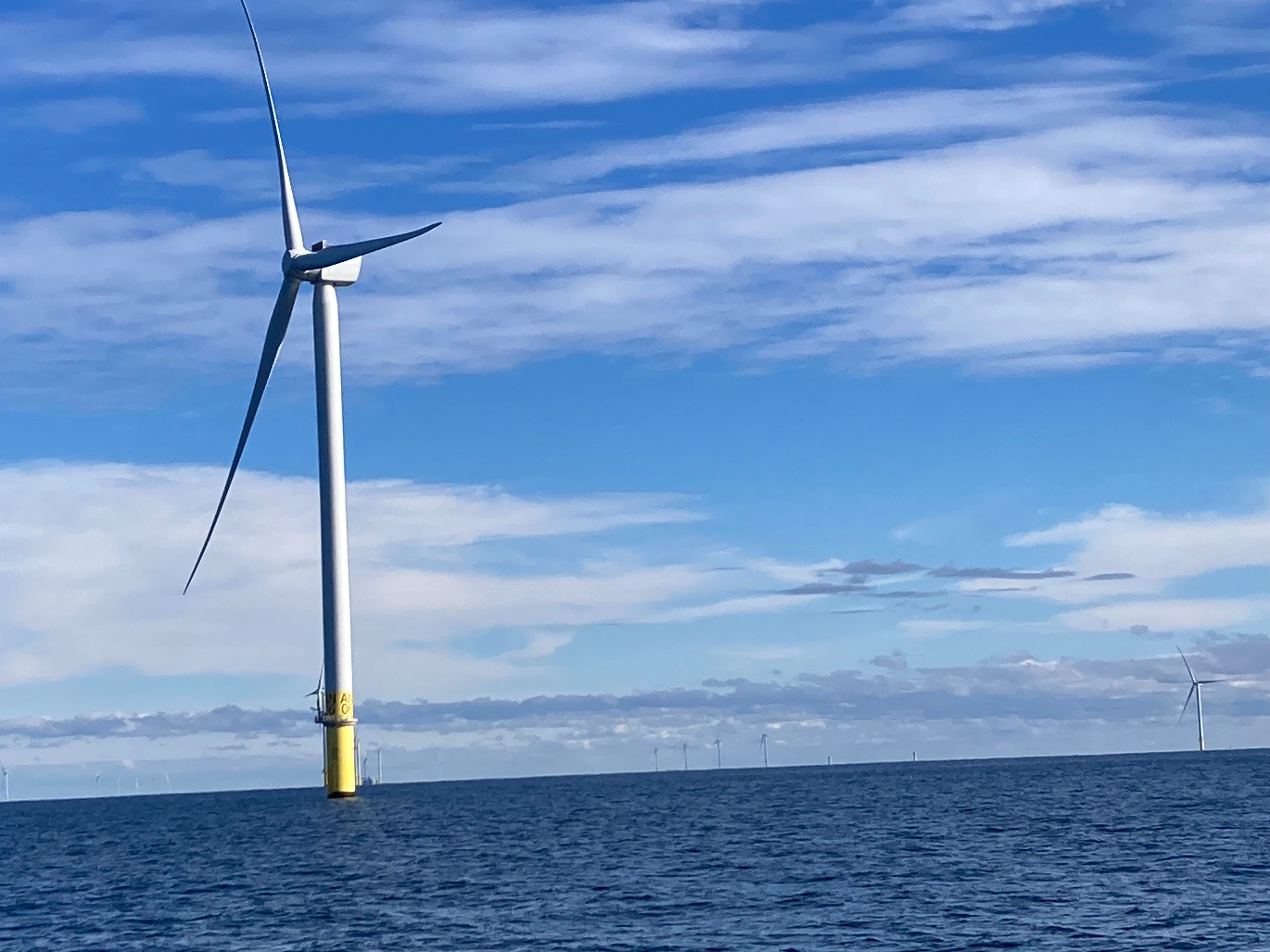
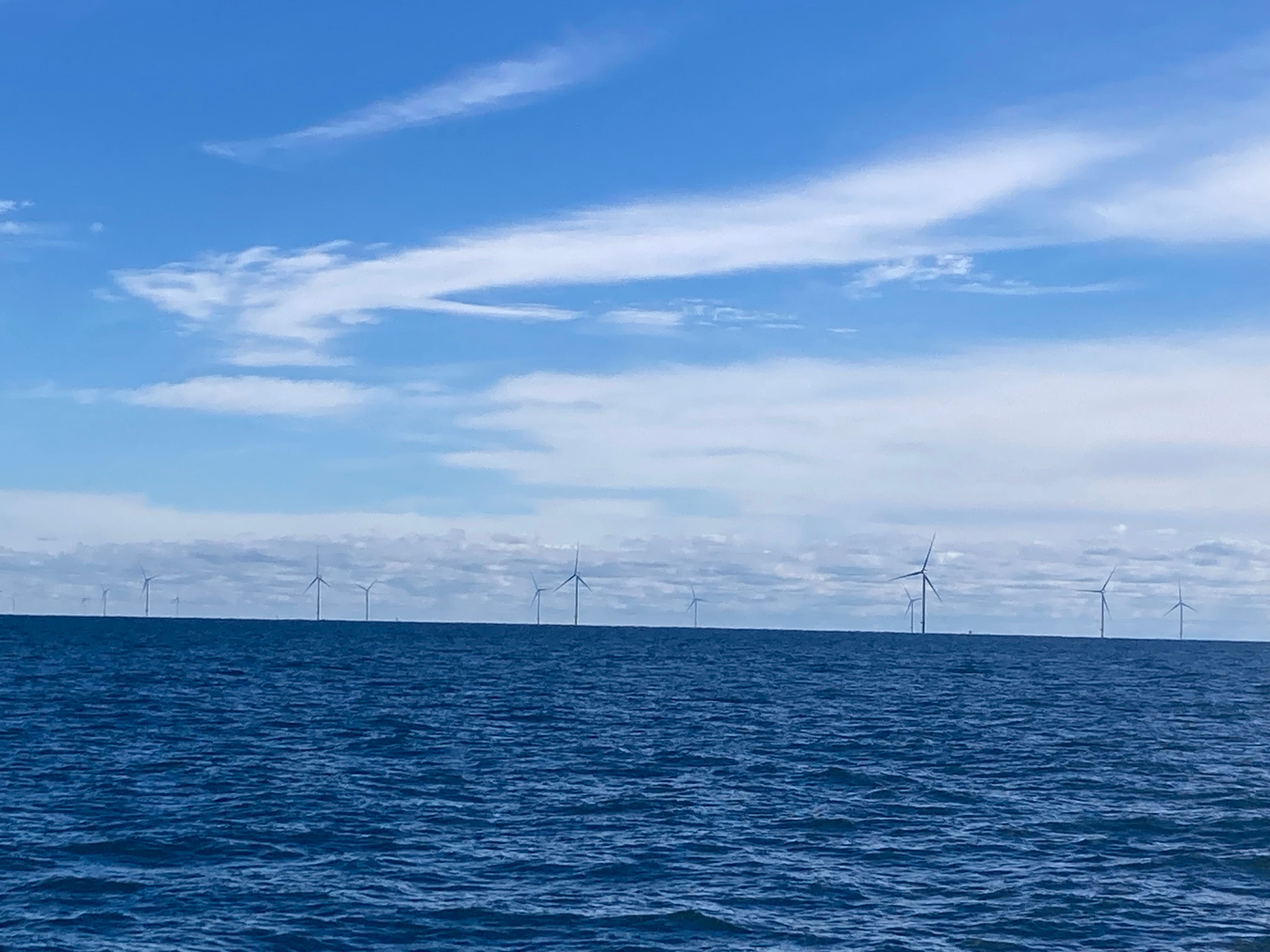
As One Earth Now previously reported, offshore wind is already demonstrating that it is a viable source of energy and one that is co-existing with the marine environment. South Fork Wind, the nation’s first, fully operational commercial-scale offshore wind farm, is supplying clean electricity to the New York grid and has met or even exceeded performance expectations during its first year of operation. As Orsted’s Norm Zeyack explained during a recent boat tour to see the project up close: “South Fork’s performance is translating into real value for New York State ratepayers.”
The Trump administration’s move to block offshore wind may also jeopardize energy and infrastructure permitting reform legislation that is currently pending in Congress. A version of the legislation – which critics warn would weaken a bedrock environmental law called NEPA – passed the House of Representatives last week, but has not yet passed the Senate. In a statement responding to the administration’s offshore wind pause, Democratic Senators Sheldon Whitehouse, Ranking Member of the Environment and Public Works Committee, and Martin Heinrich, Ranking Member of the Energy and Natural Resources Committee, said the move leaves permitting reform talks “dead in the water.”
“The illegal attacks on fully permitted renewable energy projects must be reversed if there is to be any chance that permitting talks resume,” the senators said. “There is no path to permitting reform if this administration refuses to follow the law.”