

Credit: npcaonline via Flickr, CC BY 2.0
U.S. lawmakers are back in Washington for the lame-duck congressional session following last week’s historic “blue tsunami” midterm election that saw Democrats flip control of both the House and Senate by considerable margins. And yet, rather than wait for the new Congress to be seated in January, some Democratic lawmakers are forging ahead with passing a controversial and, critics say, deeply flawed energy infrastructure permitting bill that is fervently backed by the fossil fuel industry as well as the Trump administration (including new chief of staff Stephen Miller) – the biggest obstacles to climate action this country has ever seen.
The bill, called the Bipartisan American Affordability and Jobs Act, or “BAAJA” for short, cleared a key procedural hurdle in the Senate on Monday with a 73-25 vote in favor of advancing it. A final Senate vote could come next week. Republican Sens. Shelley Moore Capito (R-WV) and Mike Lee (R-UT) and Democratic Sens. Sheldon Whitehouse (D-RI) and Martin Heinrich (D-NM), the bill’s lead sponsors, have touted it as a win for affordability, jobs, energy security and grid reliability, and yes, climate.
“Once this bill is law, it will have a more powerful climate effect in the power sector than the IRA will have, largely because of the destruction wrought by Republicans on the IRA. This becomes our biggest implemented climate bill,” Whitehouse said during a press conference on Monday, comparing BAAJA to the Inflation Reduction Act – legislation enacted under former President Joe Biden that was hailed as the largest investment in climate action and clean energy in U.S. history, but was largely reversed by Republicans with their One Big Beautiful Bill Act.
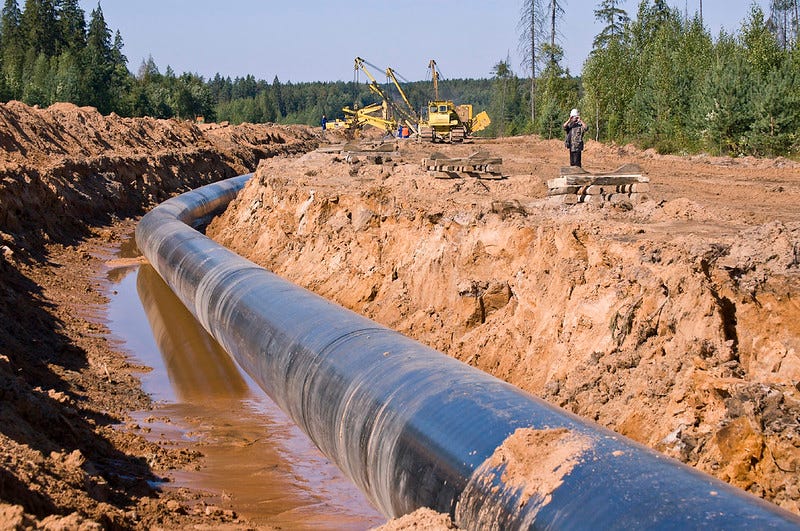
BAAJA basically makes it easier to build big things, facilitating the permitting of all kinds of developments and infrastructure – from oil and gas pipelines and AI data centers to renewable energy projects to potentially even ICE detention centers. Critics argue that it strips away environmental protections under bedrock environmental laws, undermines Tribal sovereignty and environmental justice and limits public input and participation in decision-making while stifling judicial recourse. Proponents say that it cuts through burdensome red tape and shortens the time it takes to get projects approved and built, while ensuring that permits cannot be revoked by any administration. Democratic supporters like Whitehouse point to this “project certainty” provision as a way to stop Trump from going after already-permitted clean energy projects like offshore wind. But on Monday Trump suggested that he would continue to try block these projects, saying he “will not approve wind turbines because wind turbines are a major loser.”
Clean energy backers say the bill is a necessary compromise because, although it could boost fossil fuels, it would also help unleash more renewable energy onto the grid through major transmission line upgrades, which has been the biggest bottleneck to getting cheap clean energy online.
“This is a climate and clean energy bill,” Whitehouse, who’s been one of the strongest voices for climate action in Congress, said. “This is gigaton-scale, emissions reduction savings. And it moves us much more towards solar, wind and batteries.” He was referring to an analysis from Rhodium Group that found that the bill could reduce greenhouse gas emissions by up to 1.5 gigatons by 2040.
BAAJA critics note that this analysis also finds the bill would likely increase fossil fuel infrastructure like gas pipelines and LNG export facilities and that the projected emissions reductions are actually quite minimal. “At best, the model shows cumulative greenhouse gas emissions reductions from 2027-2040 of only 2.4% under BAAJA compared with current policy,” said Oil Change International, adding: “Proponents’ model shows BAAJA unleashes new gas infrastructure without estimating those impacts on emissions from the combustion of increased U.S. gas exports abroad.”
Independent modeling by Kevin Kircher, an engineer and assistant professor at Purdue University, finds that this bipartisan permitting bill could lead to increased domestic greenhouse gas emissions and increased deaths from air pollution. “The increased climate and mortality impacts come from increased domestic fossil fuel use,” he states in the paper’s abstract.
While BAAJA is touted by proponents like Whitehouse as a “clean energy bill” under the notion that cheaper renewables will beat out fossil fuels in the marketplace, critics and skeptics worry it could very well be a fossil fuel bonanza. The American Petroleum Institute and Big Oil executives are amongst the bill’s most ardent supporters, which should give any climate advocate pause. API listed permitting reform as one of its top priorities for this year, along with other agenda items like stopping climate liability laws and lawsuits.
President Trump himself touted the bill’s boost to fossil fuels in a recent Truth Social post, saying it will codify his energy agenda and make it even easier to build mines, power plants, pipelines, and AI data centers. In addition to Big Oil, Big Tech stands to benefit from the bill’s swift passage. (Whitehouse just happens to rank number one in the Senate for data center-related stock investments including in chip manufacturer NVIDIA, according to Forbes).
Given that context, many climate and environmental groups are now opposing this bill, especially in its current form that is being rushed through the lame-duck Congress. Prominent environmental leaders like Al Gore and Bill McKibben have spoken out against it. Youth-led climate groups like the Sunrise Movement and Climate Defiance are adamantly opposed, as are groups like the NAACP and scores of environmental justice organizations.
Scientists and Health Groups Speak Out Against the Bill
So too are public health professionals and advocates. More than two dozen health organizations, led by Physicians for Social Responsibility, sent a letter to senators on Monday expressing their opposition to BAAJA. “We are concerned that the bill in its current form will lock us into prolonged reliance on fossil fuels,” they write. “We cannot in good conscience support any proposal that endangers communities or impedes them from taking actions to protect themselves from health and environmental harm. The vague language of certain BAAJA provisions, such as project certainty and definitional changes to terms like disparate treatment, will inevitably be used by industries to further their own profits at the expense of communities that are impacted by industrial pollution.” The American Public Health Association and American Lung Association were among the letter’s signatories.
What about climate and environmental scientists? Are they supportive of this purported climate bill? I reached out to several of them and surveyed Bluesky to see what scientists – you know, the actual experts who ideally should be informing environmental policies – have to say about BAAJA.
“This bill would lock in new fossil fuel infrastructure. That is why it is extremely problematic from a climate perspective.” - Michael Mann, climate scientist
Sandra Steingraber, a biologist and leader in the anti-fracking fight, and senior scientist with the Science & Environmental Health Network, did not hold back in her criticism of the bill:
“SB 5653 is an energy permitting bill in the sense that it permits polluting, climate-wrecking energy projects to move forward. It permits the kneecapping of communities’ ability to mount legal challenges. It permits pipeline developers to run over state laws that protect water. It permits the gutting of federal environmental review. It permits the prolonged reliance on fossil fuels and the proliferation of data centers. And, in all of this, there are profound consequences for public health in the form of water depletion, air pollution, and climate instability. This is why Concerned Health Professionals of New York joined 29 other health organizations in opposing this bill in its current incarnation. Whatever consolation prizes BAAJA contains for building new transmission lines and improving the grid for renewable energy projects, its big trophies will be sucked up by fossil fuel projects and data centers, which are, in any case, increasingly ignoring the grid altogether and moving to gas-fired, behind-the-meter private power plants, which are even more leaky and polluting than gas-fired utilities. I think the bill is a travesty and will be used in bad faith by bad actors to further entrench fossil fuels and squelch public participation in local decision-making. There is no logical reason why we can’t just wait until the new Congress is seated to begin reimagining how we make decisions about energy projects and who gets a voice in the process.”
Ayana Johnson, a marine biologist and climate advocate, has called the bill “horribly flawed.”
“Trump and the American Petroleum Institute are jazzed about it. Red flag!” Johnson wrote on Bluesky. “If the best-case modeling is a few percent decline in carbon pollution, it’s basically the status quo, so why not try to negotiate a better bill in the new Congress?” she said on a post-election podcast episode.
Robert Kopp, a climate scientist at Rutgers University, wrote yesterday on Bluesky: I haven’t been following the details of BAAJA as closely as I should, and we do need permitting reform for renewables and transmission, but the fact that *this* bill is strongly backed by AI companies and Stephen Miller is pretty convincing.”
Bob Howarth, David R. Atkinson Professor in Ecology and Environmental Biology at Cornell University, told me this via email:
“In general, I hold Senator Whitehouse in very high regard, but I strongly believe he is on the wrong side on this issue. Yes, we need some reforms to make it easier to build out solar, wind, and the grid to connect them. But in this case, the bill goes much too far and throws a lifeline to oil & gas interests, as well as those who plan to build data centers powered by gas. Overall, this is bad for the climate, and it is bad policy.
Having no bill at all for the next 2-3 years is preferable to this ‘reform,’ which I hope will be voted down.”
The Union of Concerned Scientists has also taken an oppositional stance to the current bill. “The Senate bill was largely crafted behind closed doors without meaningful input from environmental groups, scientific experts, Tribal governments, or the communities most impacted by fossil fuel pollution and climate impacts. Bill sponsors have rejected committee hearings or mark-ups and instead moved directly to a floor vote,” the organization said in a recent statement.
David Watkins, director of government affairs for the Climate and Energy program at the Union of Concerned Scientists, said the bill as currently formulated “will lock in fossil fuel projects now and for generations to come.”
“If enacted as currently drafted, BAAJA would be the most significant legislative reversal in environmental and community protections in decades,” Watkins said. “To get bipartisan support for negligible reductions in emissions, this deal would convert compliance with the National Environmental Policy Act, Endangered Species Act, National Historic Preservation Act, and Clean Water Act into largely voluntary exercises.”
Ed Maibach, a public health and climate communication scientist and founding director (emeritus) of the Center for Climate Change Communication at George Mason University, had this to say when I reached out to him about BAAJA:
“The fact that Big Oil is in strong supporter of the bill is ample reason to suspect it’s a problematic bill because our nation and the world need to end the fossil fuel era, not prolong it. The Kircher analysis, which is the only independent analysis I’ve seen thus far, suggests the clean energy benefits of the bill are offset by the fossil fuel expansion costs. The next Congress will be in a better position to write a bill that truly addresses America’s energy needs in a manner that’s also responds to the profound harms associated with fossil fuels and climate change—even if the President vetoes it. Best not to take actions now that assure expansion of fossil fuels.
Lastly, I have a generic concern with this bill and most bills: Bills should be written such that deeply concerned stakeholders can read and understand them and their consequences. Otherwise, we are arguing about proposals we don’t fully understand.”
Michael Mann, a climate scientist and distinguished professor in the Department of Earth and Environmental Science at the University of Pennsylvania, has called BAAJA a “problematic fossil fuel trojan horse”, explaining in a recent commentary that it “guts foundational environmental laws to fast-track and ‘lock in’ major fossil fuel infrastructure and gas-powered AI data centers.”
“It’s an ‘all of the above’ bill that embraces the flawed Koch-funded ‘abundance’ framing,” Mann told me via email. “No less than the International Energy Agency has very clearly stated that the addition of new fossil fuel infrastructure is incompatible with limiting planetary warming below dangerous levels. This bill would lock in new fossil fuel infrastructure. That is why it is extremely problematic from a climate perspective.”